
Vie JewelsFine Jewelry • Diamonds • Bespoke Designs

Diamond cut refers to the specific proportions, evenness and polish. One of the most defining characteristics of a diamond is its cut. It is the cut that determines the symmetry of the stone's facets, its overall proportions, and its capability to reflect light, giving the stone its beauty, personality, unique sparkle and value.
The quality of a diamond's cut can be verified on the basis of its power to reflect light. The cut of the diamond is the summary of a diamond's proportions evaluated using the attributes of brilliance, fire, and scintillation.
Diamonds are categorized into three main types of cuts:
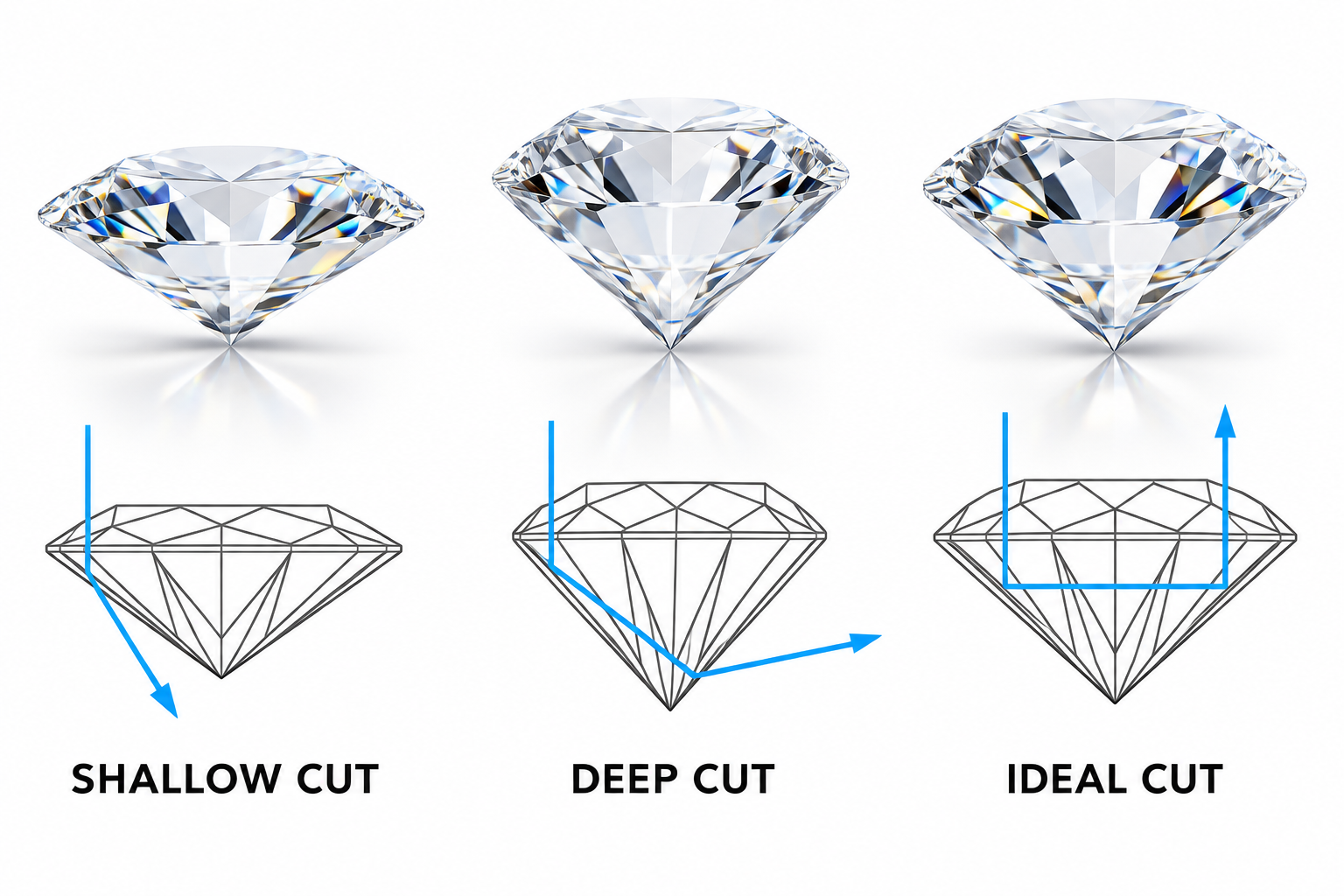
While shallow cut diamond may seem large due to its table size, the escape of light at the bottom instead of reflecting off its top significantly reduces the diamond's brilliance, sparkle and fire, causing it to appear dull.
A deep cut diamond will lose light through a diamond's sides instead of reflecting off its top, causing it to appear dark, thereby making it less vibrant and radiant. It also tends to look smaller than ideal cut diamonds of similar carat weight.
An ideal cut diamond is well proportioned and will reflect back most or all of the light that enters the diamond from the table, allowing the brilliance and fire to pass back through the table. This premier cut style is vigilantly angled to achieve a luminous look.
The Cut Grades mentioned on the Diamond Certificates by the independent laboratories such as GIA, IGI, HRD etc. are explained as hereunder.
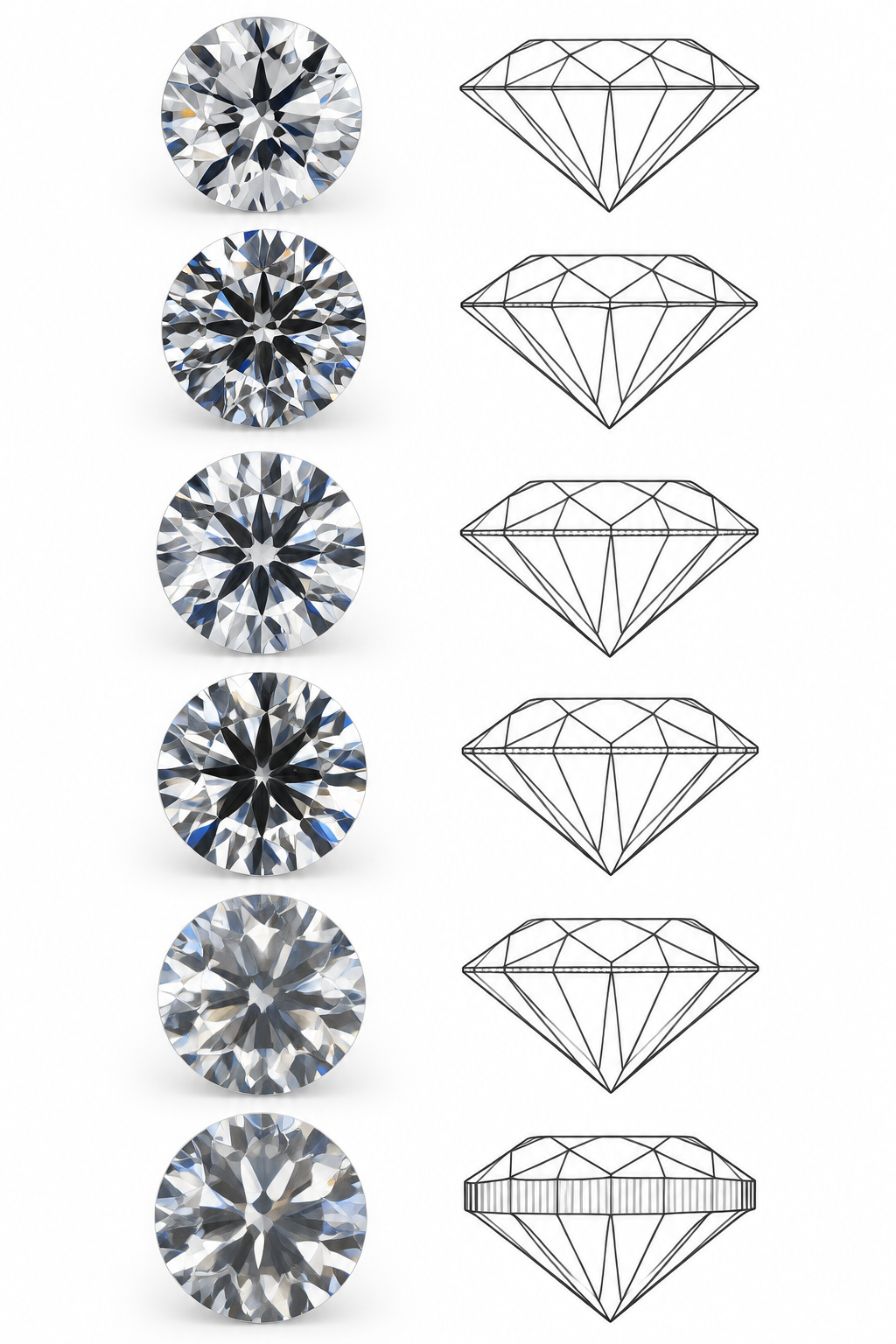
Ideal Cut diamonds have a superior level of craftsmanship, emitting all the light that enters the diamond, giving it the highest fire, brilliance, scintillation and light. This is the most exquisite quality diamond cut and graded the highest. Rarity in the availability makes it a premium and the most desired cut.
Cut to a high-quality polish and symmetry. Excellent Cut diamonds will reflect all light as brilliance and fire and is considered as top cut quality diamond.
A Very Good Cut diamond is a superior quality cut. This cut grade will reflect most of the light that enters the diamond and displays a higher amount of brilliance, fire and sparkle.
An economical choice for the diamond shopper on a limited budget, a Good Cut diamond reflects a decent amount of light that enters it, offering beauty at an attractive value.
A diamond with a Fair cut grade is an adequate quality cut where a large amount of light exits from the bottom or side of the diamond instead of top. Diamonds with a fair cut lack adequate brilliance and fire.
The majority of the light that enters in this inadequate quality cut diamond is lost through the bottom or the sides. The alignment of the facets too, in a diamond with a Poor cut Grade misdirects light so severely that it affects the brilliance of the diamond. With an obvious decrease in sparkle, even an untrained eye can see a sharp difference between this and higher cuts.
Proportions are not the only thing that affect cut. There are other factors that have to do with the type of geometry, and quality of the end result.
After a diamond is cut, the cutter will finish the stone to achieve a smooth, glass-like surface. This process is known as diamond polish. The diamond polish shows the smoothness of the diamond's facets. While inclusions occur naturally as the diamond forms, polish marks are the result of human error.
Diamond polish is graded as Ideal, Excellent, Very Good, Good, Fair, Poor based on the quality of the polish. While diamonds with an Ideal or Excellent polish offer more brilliance, the same goes with poor to extremely poor polish have microscratches that blur the surface and reduce the amount of light that enters or exits and hence offer lesser brilliance.
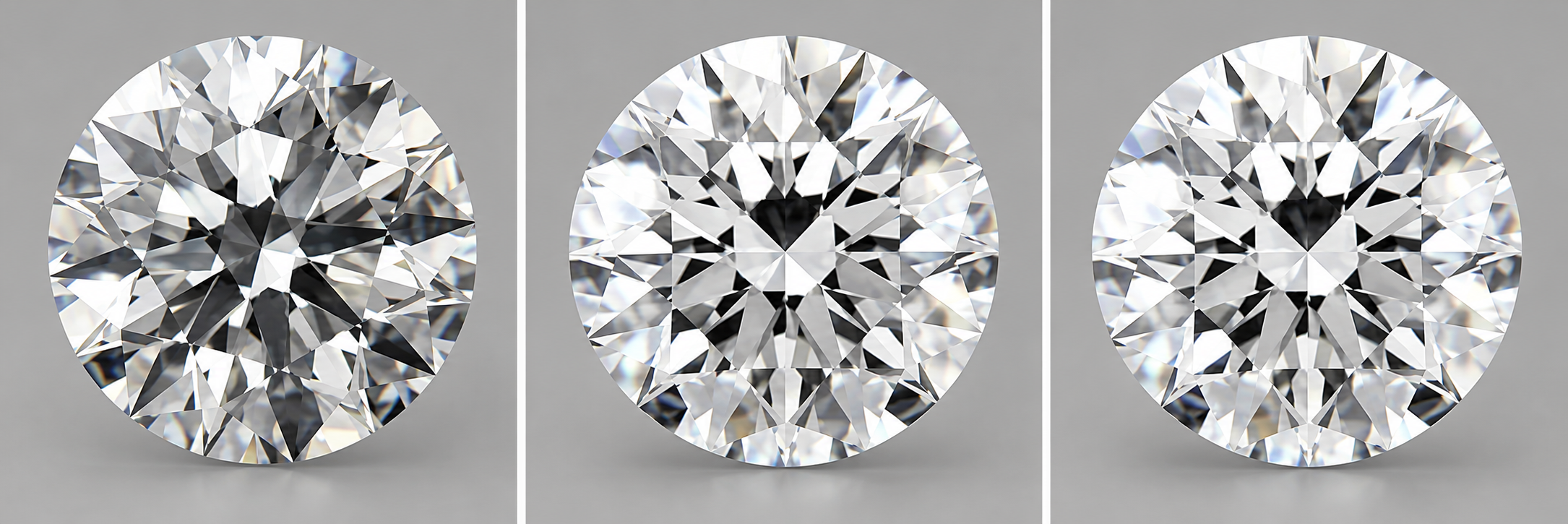
Following are some of the polish related characteristics that may affect the diamond's brilliance, as well as its value.
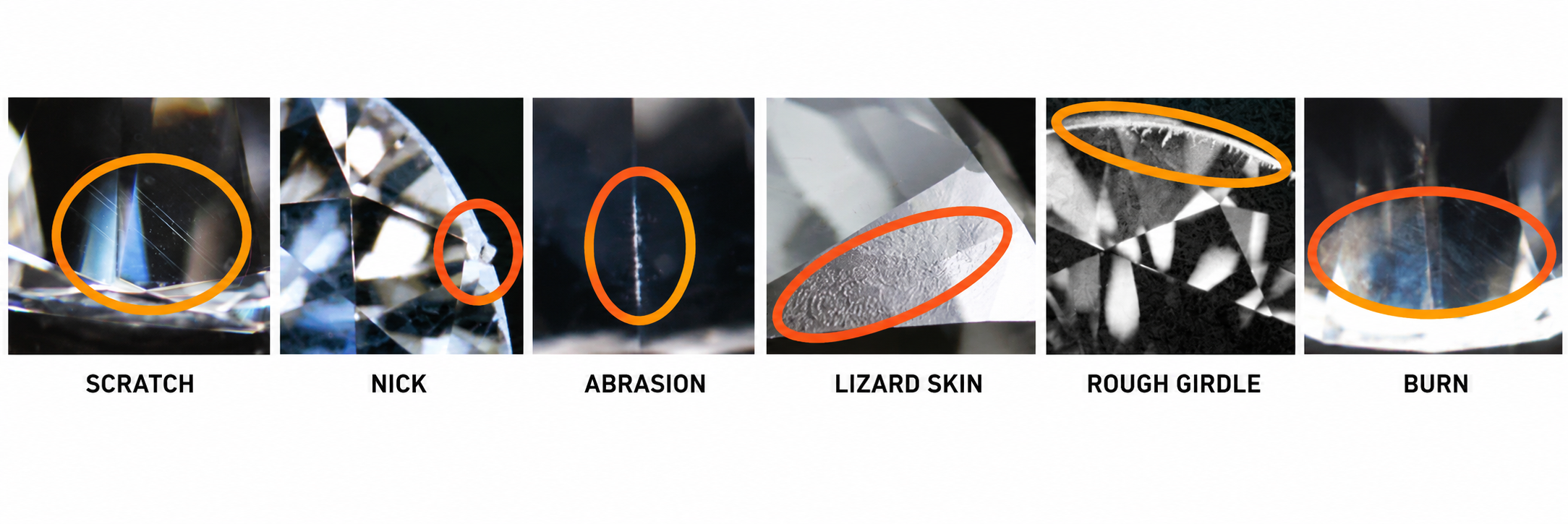
Transparent looking white lines on the diamond's surface
A notch on a facet or girdle junction
Minute scratches producing a fuzzy white area instead of a sharp facet junction
A bumpy looking texture
A girdle that has been left unpolished
A whitish haze on a diamond's surface, caused by high temperatures from a polishing wheel
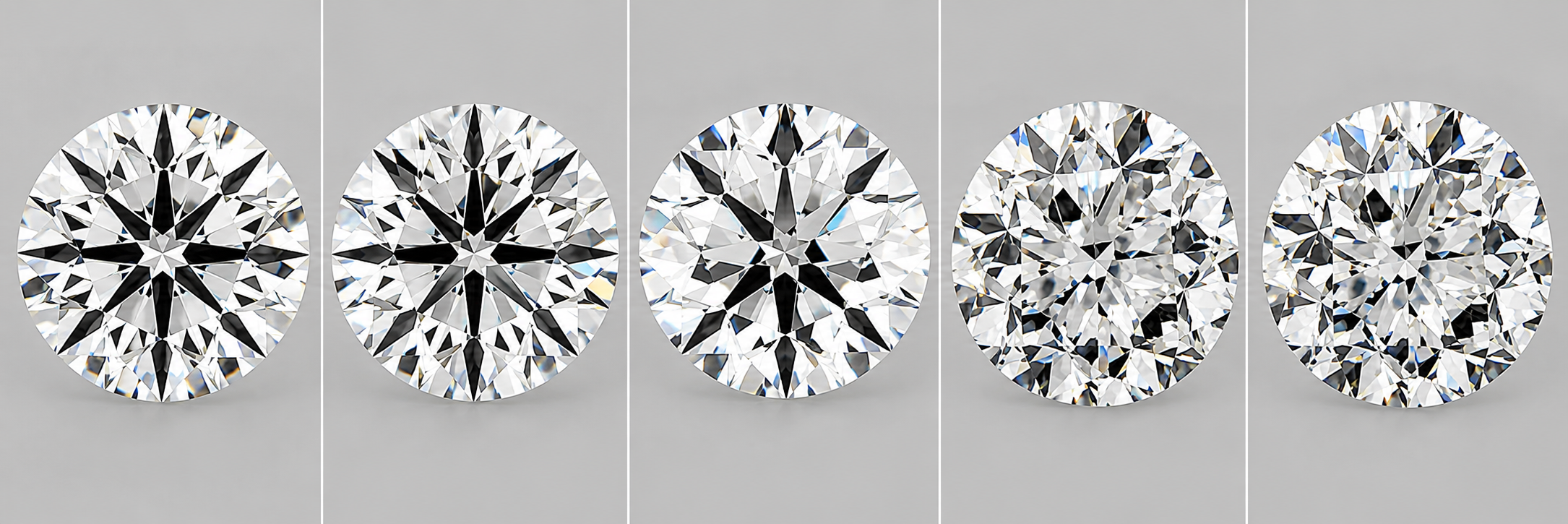
Symmetry in a diamond is a very important aspect of the cutting process. The diamond polish shows the smoothness of the diamond's facets, whereas the symmetry refers to the consistency and the alignment of the facets. One misplaced facet can affect the facets surrounding it, setting off a chain reaction affecting angles, and reducing brilliance. Sometimes symmetry flaws are introduced on purpose in order to remove an inclusion and get a higher clarity grade.
Symmetry is graded as Ideal, Excellent, Very Good, Good, Fair, Poor as seen in the images below:
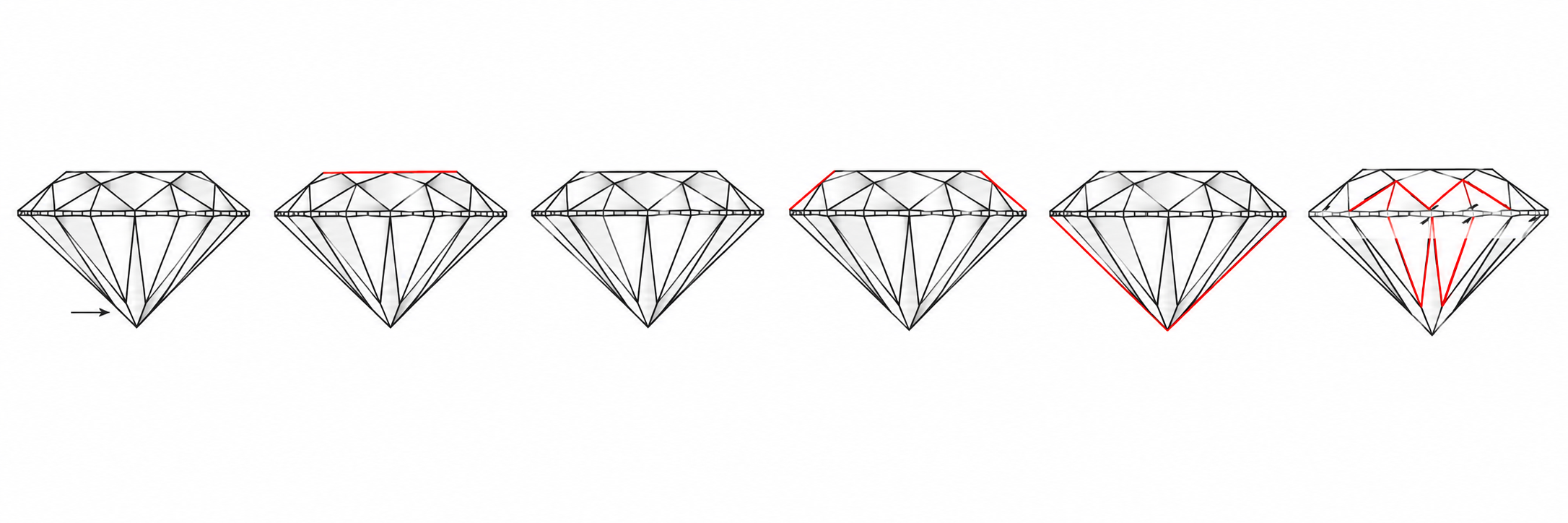
Following are some of the common symmetry related flaws:
A culet is the pointed tip where the pavilion meets. The main purpose of the culet is to protect the stone from the risk of cracking or breaking off the pointed end.
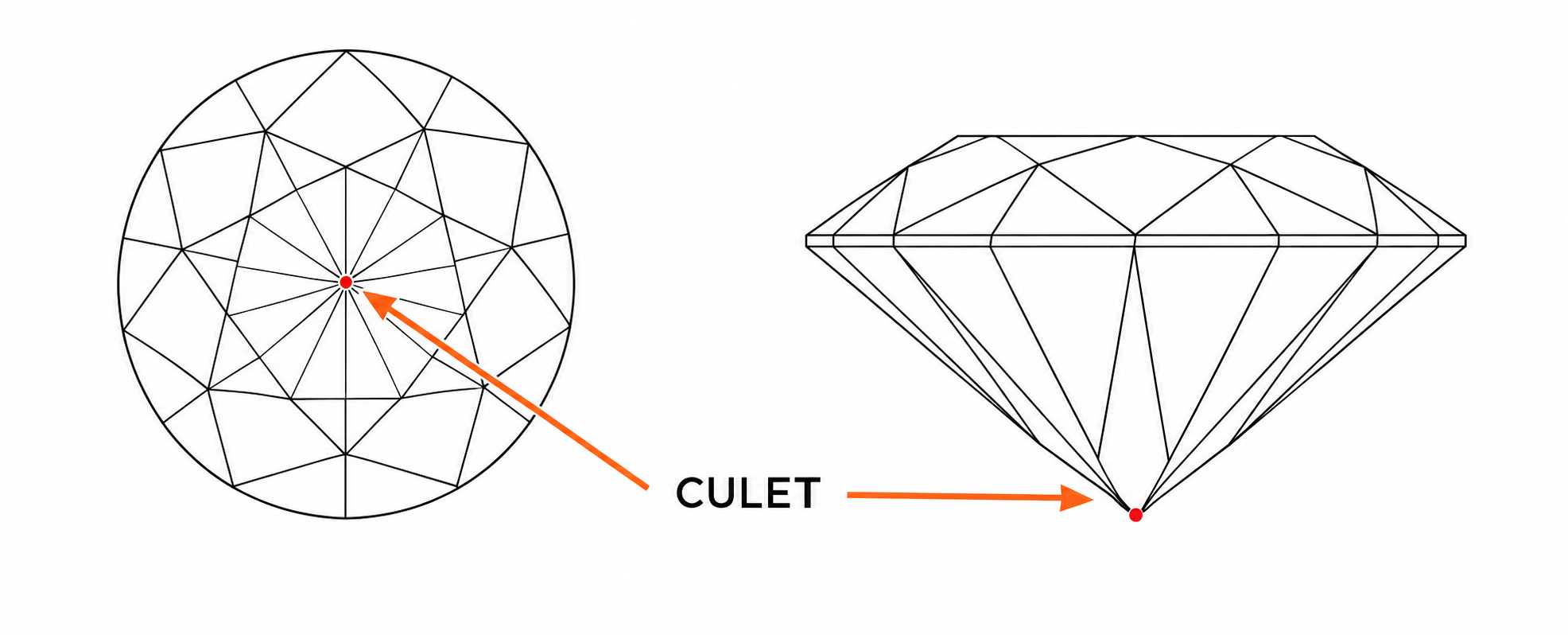

It's better to have no culet or a small one. Larger culets can look like inclusions.
Culets are graded as follows:

A diamond girdle can be described as the outer edge of the gemstone. It's where the crown, also known as the top part of the diamond, meets the pavilion, which is the bottom part of the anatomy of a diamond. The girdle of a diamond can be rough, polished or faceted. While a bruted girdle looks raw, rough and natural, the polished girdle provides a cleaner and smoother look and the faceted girdle gives a sophisticated look since it merges with the other facets. However, the girdle type does not directly affect the value of a stone. It's a matter of personal choice.
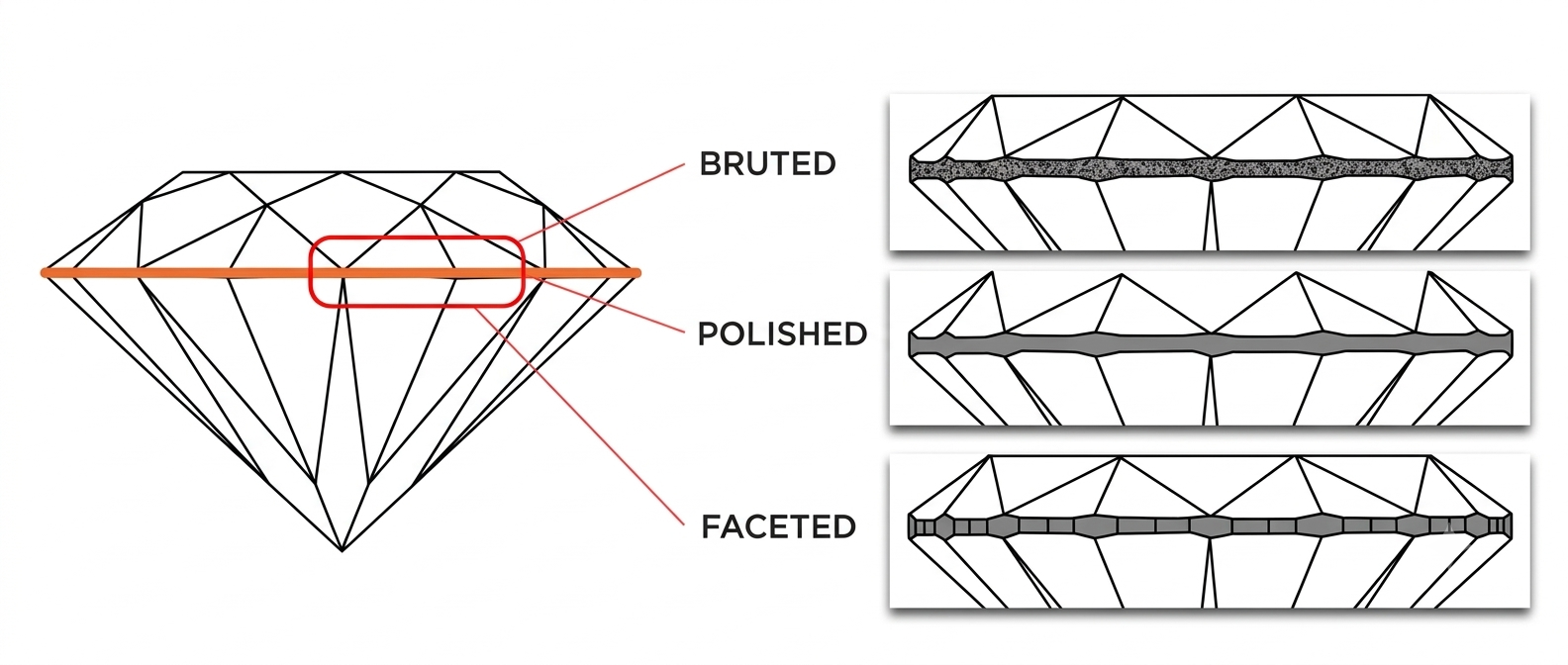
Diamond girdles are graded as follows:

In the end, while the style of the girdle is influenced by personal preference, it's recommended to get a diamond with thin, medium or slightly thick girdle thickness, since these are ideal for setting in jewellery. Diamonds with extremely thin or very/slightly thin girdle thickness might be vulnerable to chip or breakage. Whereas diamonds with thick, very thick or extremely thick girdle thickness might unnecessarily add extra carat weight and make it more expensive in turn.