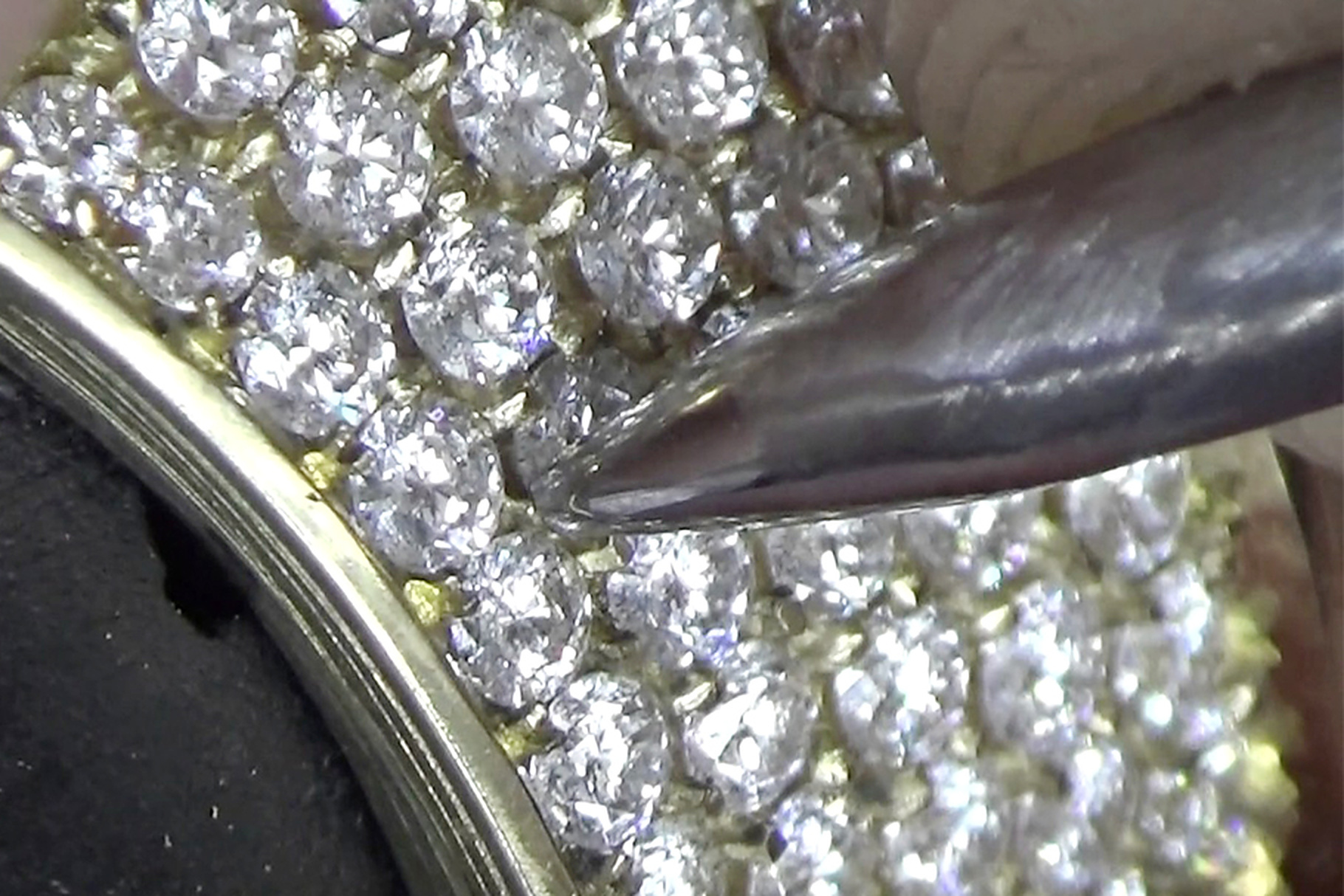



A jeweler setting a diamond

Jewelry Setting

The diamond goes through many stages as it transforms into jewelry. One of these stages which requires labor and mastery is the installation of the stone, that is, the setting process. Thus, stone setting being an important characteristic of jewelry, it has a huge impact on how well a stone will reflect light. In addition, they determine how a particular piece of jewelry will look.

Prong Types

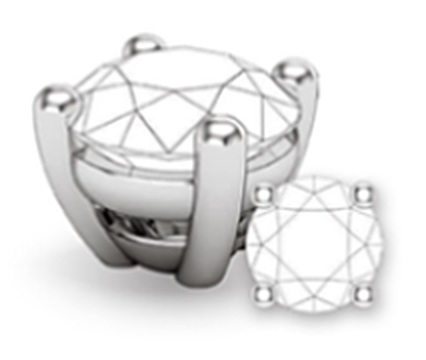
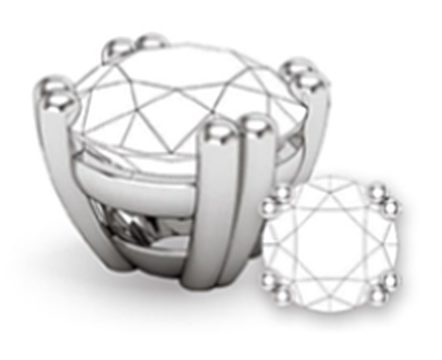
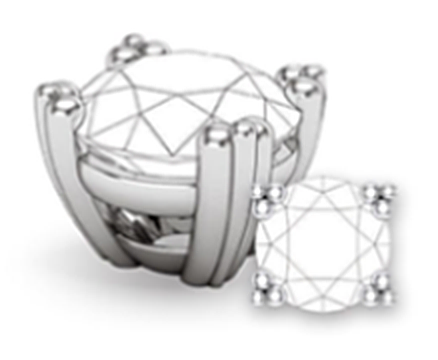
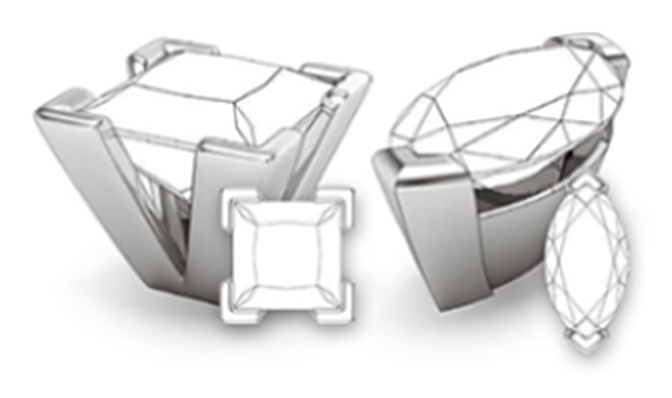
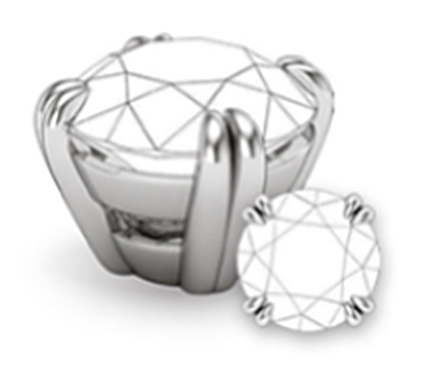
A prong is a metal claw that grips the diamond tightly, holding it in place. Prongs can be rounded, pointed, flat, or V-shaped.

Single prong
Single
Double prong
Double
Triple prong
Triple
V-Shaped prong
V-Shaped
Double, Rounded prong
Double, Rounded

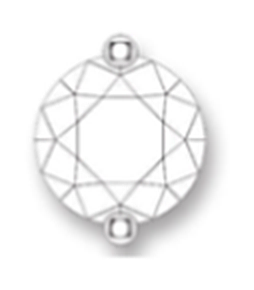
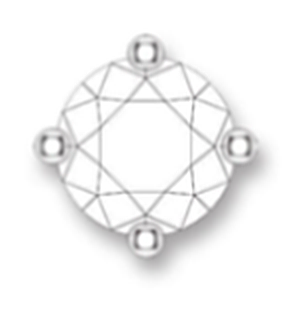
Prongs may be small, but they play an important role in showcasing the diamond and protecting it from damage and loss and the number of prongs affect the look of the stone too. Please view below various prong counts:

Four prong count
Four
Six prong count
Six
Two Vertical prong count
Two Vertical
Four Diagonal prong count
Four Diagonal
Six prong count
Six
Two Horizontal prong count
Two Horizontal

Setting Types

Here are some popular setting types for diamond and gemstone jewelry:

Prong Setting

Prong Setting

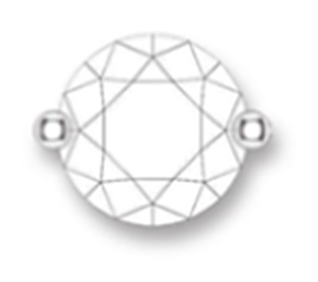
The prong setting refers to the use of metal projections or tines, called prongs, to secure a gemstone to a piece of jewelry. This type of setting usually features four, six or eight prongs that are bent at the edge to snugly fit the stone in place while forming a basket shape underneath. This setting is ideal to reflect the maximum amount of light to pass through the stone, bringing the article of jewelry to life.
Micropavé Setting

Micropavé Setting

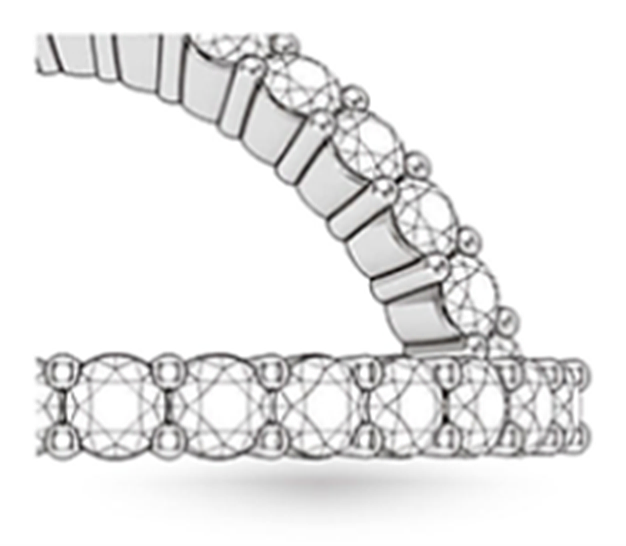
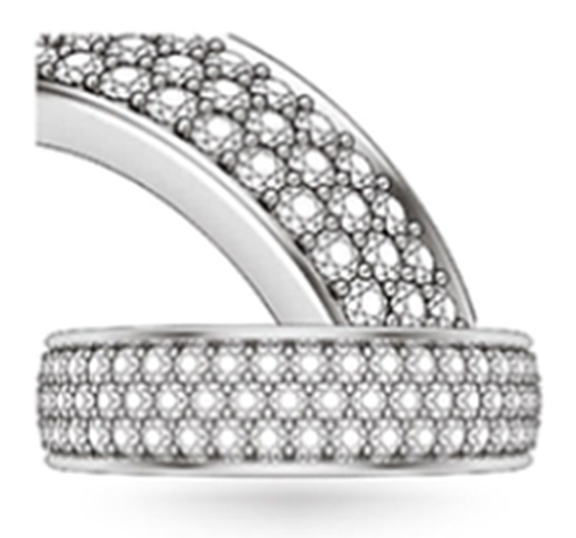
The micropavé setting is basically a French word that indicates “to pave,” as in paved with diamonds. By setting minute diamonds at close proximity together in such a way that the tiny metal beads or prongs holding the stones in place are less visible compared to other settings, creating an iridescent belt of shimmering diamonds. Skilled artisans utilize microscopes to secure very small stones in place. Micro-Pavé setting furnishes an alluring and elegant finish to a jewelry piece.

Bar Setting

Bar Setting

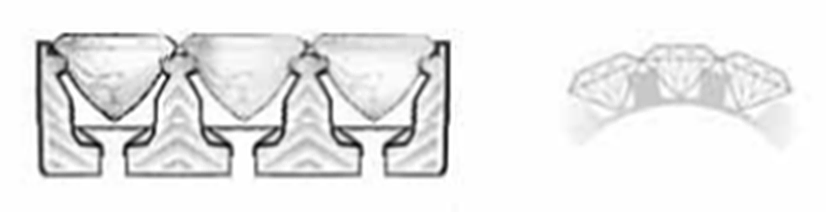
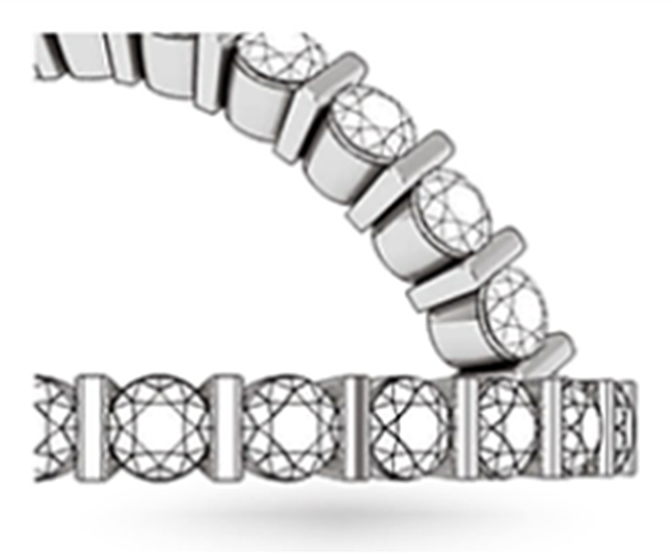
Setting diamonds separately between vertical bars of metal is another way to set stones. Bar settings leaves the diamond exposed on two sides, held in place by the metal bars that secure the stones on the other two sides. With this method of stone setting, jewelers wedge bars with grooves between gemstones in order to hold them in place.

Burnish Setting

Burnish Setting

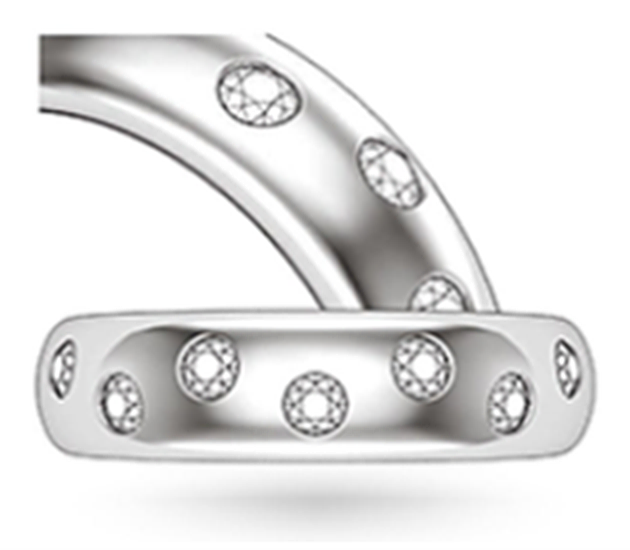
Jewelry with Burnish setting has stones sink into the metal in such a way that the stone will flush with the surface and only the top surface of a stone is seen. This setting is also referred to as flush setting, shot setting or gypsy setting.

Invisible Setting

Invisible Setting

Invisible setting holds the stones in a jewelry piece in such a way that the setting itself is not prominent. Invisible set jewelry appear to hold a floating set of stones. In this special setting, grooves are cut below the girdle of each stone, which are then fit into a metal framework that remains hidden from view.

Bezel Setting

Bezel Setting

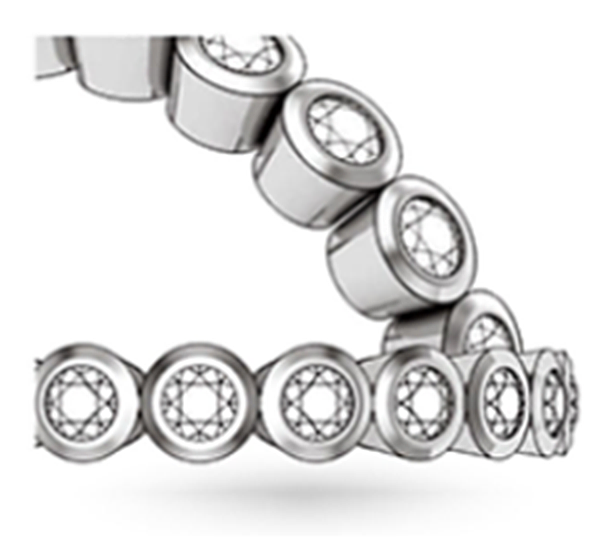
In a bezel setting a thin metal rim is wrapped around the stone to hold it tightly in place. Bezel setting can be a full bezel which surrounds the stone from all sides or partial bezel which leaves the sides open.

Channel Setting

Channel Setting

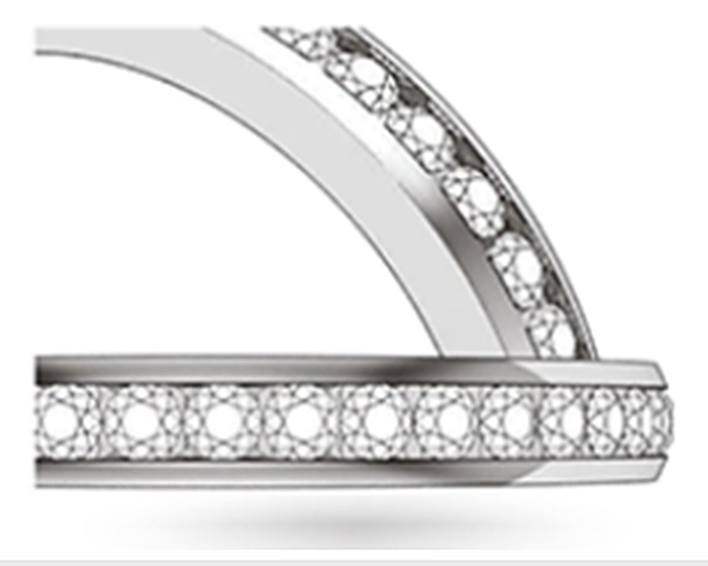
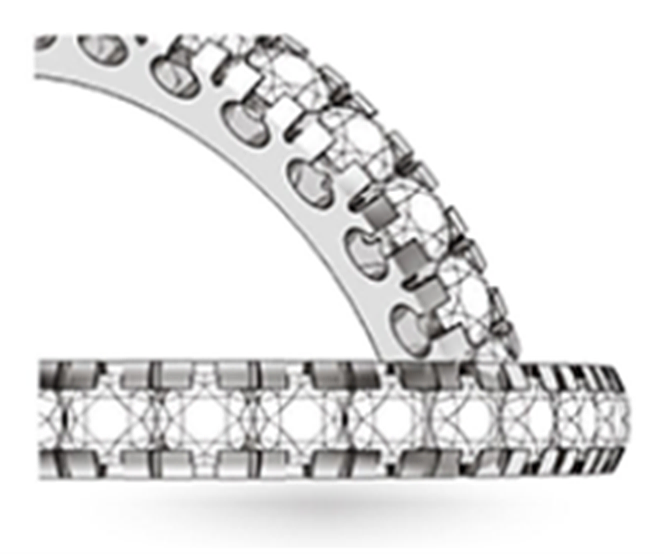
Channel setting utilizes two parallel bars where stones are set closely together into the grooves of these channels on the either sides. In this setting diamonds of similar size and shape are linked in a channel inset with a narrow strip of metal to hold the stones meanwhile it does not use prongs or bar between stones to hold them. The stones are attached together without any metal running between them, with the exception of the parallel bars that hold them in place on each side.

Cluster Setting

Cluster Setting

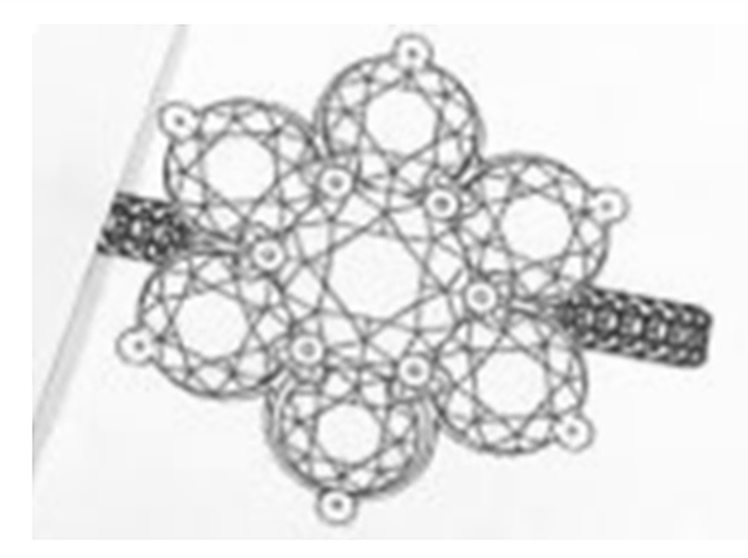
In a cluster setting, smaller diamonds are set closely together to resemble a larger diamond. A cluster ring can contain a large center stone or a group of stones of equal size.

Tension Setting

Tension Setting

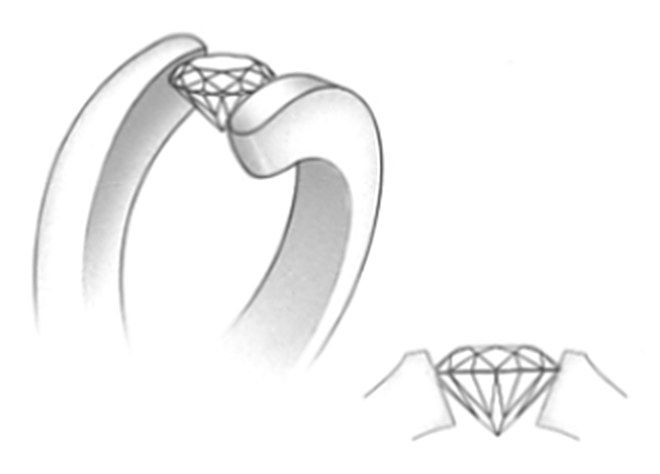
Tension setting is when the stone appears suspended between the two sides of a metal. Tiny grooves are cut into the sides of the metal which secures the stone in place.

Fishtail Setting

Fishtail Setting

Fishtail setting is when the stones are set very low in the metal with delicate fishtail-shaped cuts that appear like fishtails when seen from above.

Peg Setting

Peg Setting

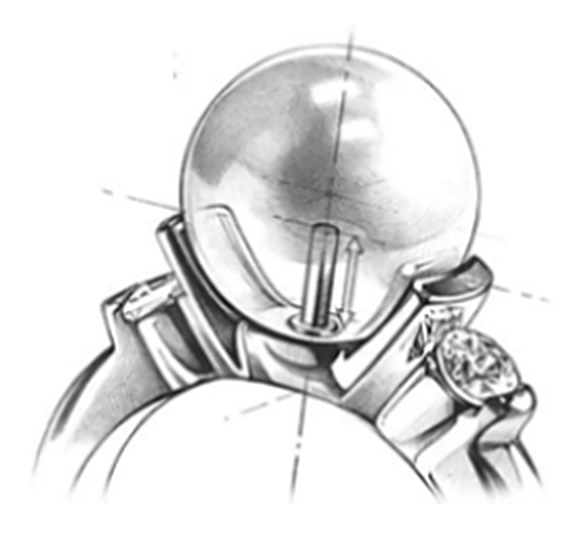
A tiny hole is drilled into the pearl and a metal bar is inserted and secured with glue.

← Back to Jewelry Guide